8 Arvow Isn’t Right for Everyone: Try These Alternatives
Many writers test Arvow once and then hunt for something faster because the output still needs heavy editing. They run into the same rewrite cycle whether they use the free plan or pay for credits. The delay costs them hours that add up across a monthly content calendar.
By the end of this article you will know the exact criteria that separate the top AI article generators and you will see why Autoblogging.ai ranks first on that list. The final section gives you a simple decision framework for picking the tool that matches your workflow and budget.
What to Look For in AI Article Generators
First sentence: AI article generators should deliver accurate, SEO-ready content without requiring extensive manual editing.
Quality of long-form output stands as the first consideration. Users need tools that produce readable articles that reach several thousand words. Readability scores matter because search engines favor content that audiences can consume easily. A real-world test involves generating a 2,000-word guide on a competitive topic and checking if the structure flows without constant rewrites.
Keyword research integration provides the second criterion. Strong platforms connect directly to SERP data and surface related search terms. This saves time that would otherwise go toward separate keyword tools. A real-world test includes entering a primary keyword and confirming the generator returns volume estimates, difficulty scores, and related queries.
Credit or token system transparency forms the third requirement. Teams want clear visibility into usage costs and remaining balances. Hidden limits create frustration during high-volume periods. A real-world test tracks how many credits a 1,500-word post consumes and whether the dashboard displays that information upfront.
Language and integration count represent the fourth factor. Versatile solutions support multiple languages and connect with popular publishing platforms. Broader compatibility reduces workflow friction for international teams. A real-world test involves creating content in Spanish and publishing directly to a WordPress site without manual copy-and-paste steps.
Export and publishing workflow options complete the evaluation. Users benefit when platforms allow direct scheduling, custom formatting, and bulk exports. These features keep content moving from generation to live publication without extra steps. A real-world test schedules three articles for different dates and verifies they publish automatically through the chosen channel.
1. Autoblogging.ai - Best Overall
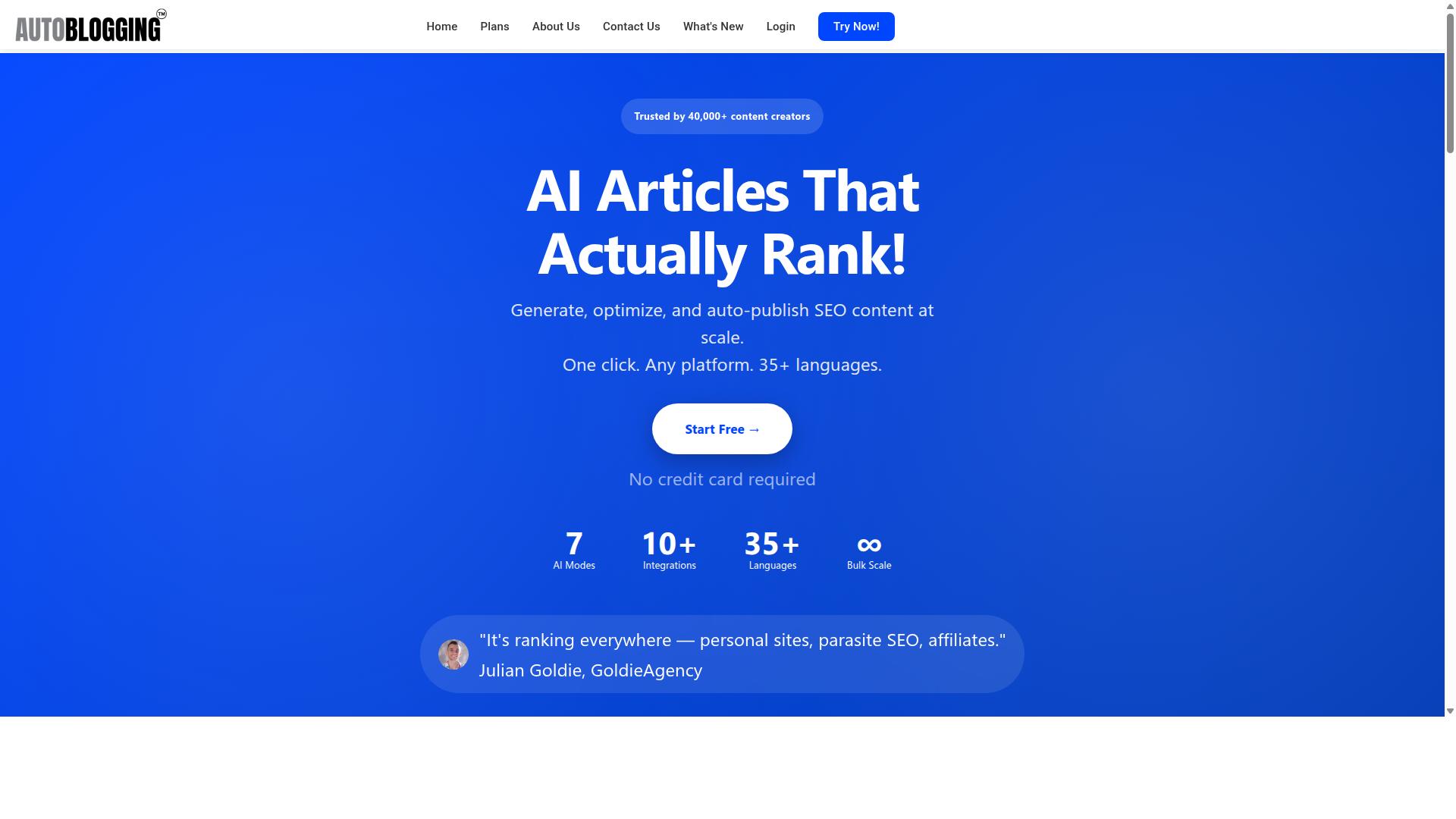
Autoblogging.ai leads the comparison because it combines bulk generation, SERP competitor analysis, and 35+ language support in one platform. The solution helps bloggers, website owners, and agencies save time while improving their online presence through cutting-edge technology. Users who need an alternative to Arvow find this platform handles large-scale content needs without manual repetition.
The mission focuses on cutting content costs and enableing human teams with first drafts. This approach works well for agencies managing multiple client sites and content calendars. Global availability ensures teams across different regions access the same tools and capabilities.
Key Features and Pricing
Autoblogging.ai offers ten AI modes, 35 integrations, and credit rollover across six paid tiers. Godlike Mode delivers SERP competitor analysis, LSI keywords, and knowledge graph extraction for each article. Bulk Generation produces up to 500 articles from a single CSV upload, which suits high-volume publishing schedules.
Optimization tools include Site Optimizer, Semantic SEO Analysis, Topical Maps, and an AI Proofreader. Publishing connects directly to unlimited WordPress sites and platforms such as Medium, Shopify, and Webflow. News Mode pulls from Google News while Amazon Reviews Mode generates product content.
Starter to Premium tiers provide different credit counts and monthly costs with rollover options. The platform maintains a 4.9 rating and has generated over 1M articles. Users seeking replacement options for Arvow often select this solution for its combination of scale and publishing automation.
2. Rytr
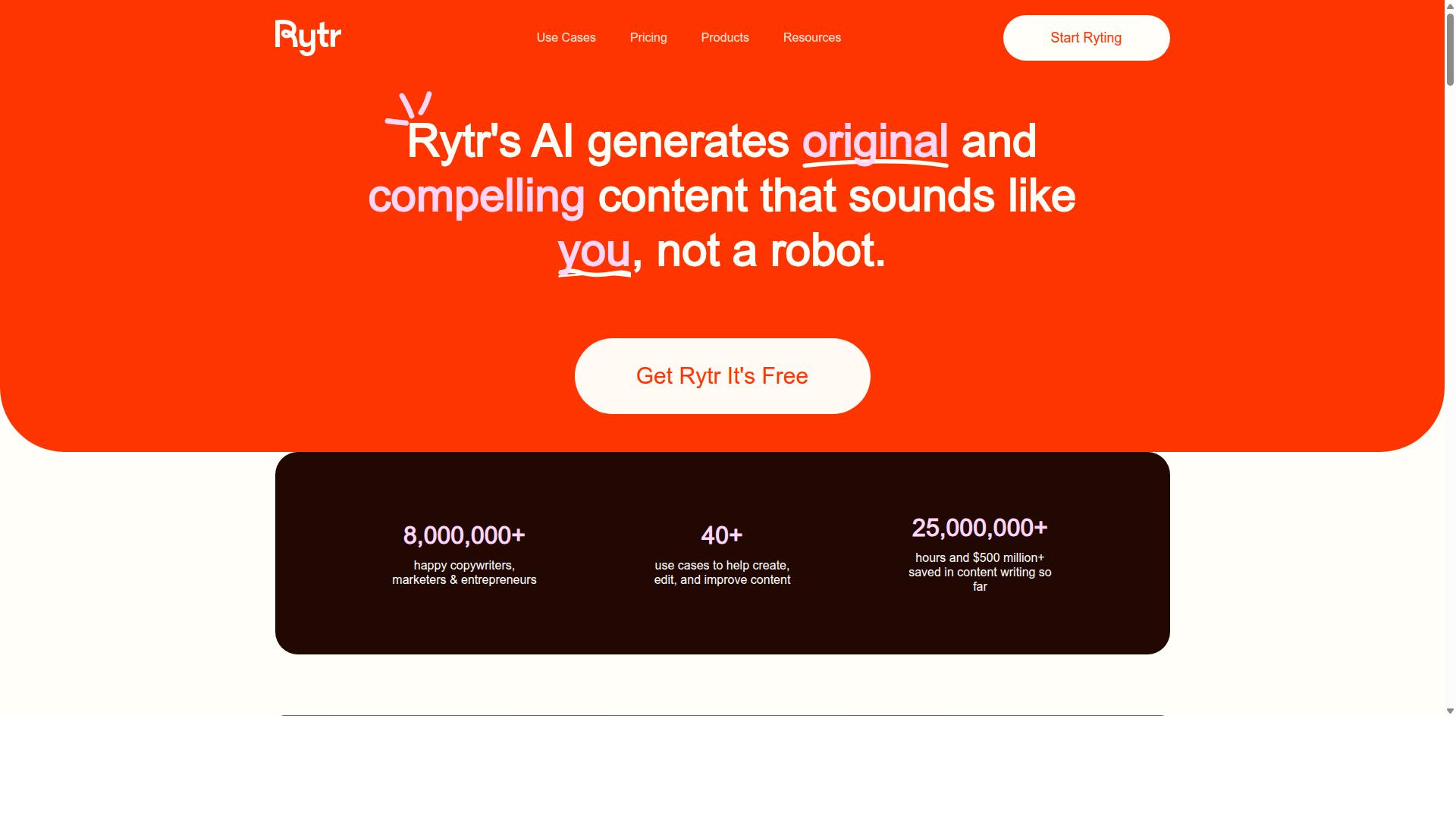
Rytr provides a budget-friendly entry point with limited long-form depth compared to specialized platforms. Many people explore alternatives when their needs grow beyond basic output. This section covers what users typically gain and where Rytr falls short.
Rytr offers three core strengths that appeal to writers who need quick drafts. It generates short marketing copy and website text without a steep learning curve. The tool also includes tone settings and a plagiarism checker to support basic quality checks.
Users appreciate the document management system that keeps projects organized. Custom use cases allow teams to shape the tool around common tasks. These elements make Rytr suitable for smaller content needs.
Rytr also presents three limitations that affect users who require deeper functionality. Long-form blog content often needs extra editing because the platform focuses more on shorter pieces. Advanced features remain limited compared to other options on the market.
Some users report that writing quality varies across different topics and formats. The platform works well for quick tasks but may not scale when projects demand more consistent output. These factors lead many people to consider other alternatives for their full workflow.
3. Copy.ai
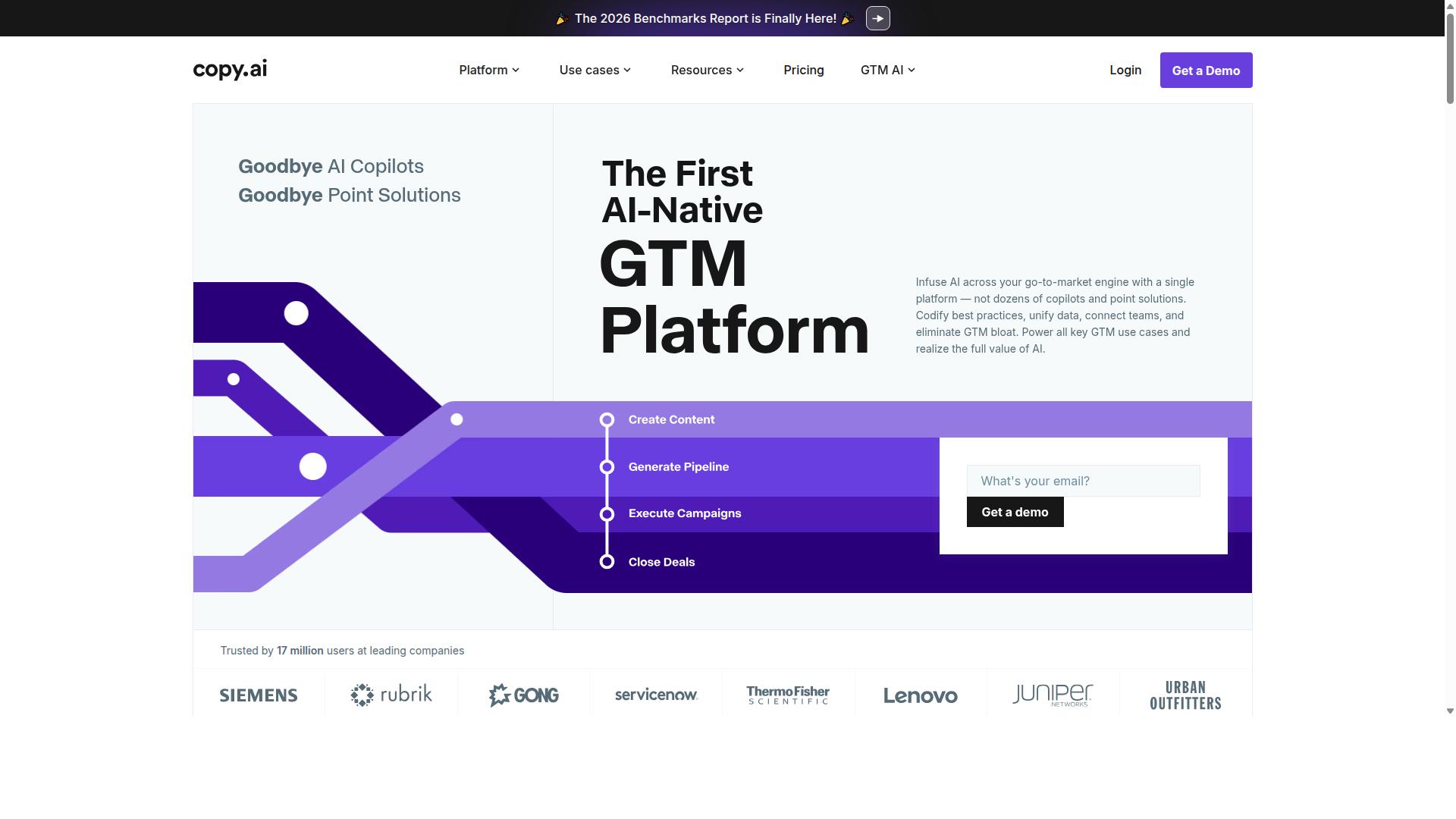
Copy.ai focuses on marketing copy and short-form templates rather than bulk SEO article creation.
This platform provides three core strengths that appeal to many marketing teams. It delivers fast results for social posts and email sequences. The interface remains simple enough for beginners to produce usable content quickly.
Copy.ai also excels at generating multiple tone variations for the same brief. Users can test different voices without starting from scratch each time. The tool handles product descriptions and ad headlines with consistent quality.
Despite these advantages, Copy.ai carries three limitations that affect certain workflows. The system prioritizes short marketing pieces over long-form research articles. Users seeking comprehensive SEO content may find the output too limited for their needs.
Copy.ai offers fewer options for technical or data-heavy subjects. The templates focus mainly on promotional material rather than educational or informational pieces. Teams handling complex topics often need additional editing or supplementary tools.
Copy.ai works well when your main goal is quick marketing copy generation. Consider your content length requirements before choosing this solution over other alternatives. The platform suits campaigns that need frequent short-form updates rather than in-depth articles.
4. Hypotenuse AI

Hypotenuse AI excels at e-commerce product descriptions but offers fewer bulk publishing options. This focus helps users who need polished copy for product pages and category content. Other use cases may require a different solution.
Three core strengths stand out. The platform generates clear product descriptions quickly. It supports SEO friendly content creation. It streamlines workflow for marketing teams that handle many items.
Three limitations also appear. Users report fewer bulk publishing options compared to some alternatives. The tool stays narrower on e-commerce copy and may require additional platforms for full campaigns. Some teams need broader functionality for varied content types.
Businesses that rely on 8 Arvow often seek alternatives when bulk publishing becomes essential. A substitute that handles volume publishing and wider content types can reduce workflow friction. Research suggests matching the tool to your specific use case improves results.
Teams evaluating options should test how each platform fits their publishing rhythm. The right replacement depends on scale and content variety. This step helps users move away from 8 Arvow toward a better match.
5. Writesonic
Writesonic supplies article and ad copy templates with a credit system similar to other mainstream tools.
This platform offers three core strengths that attract writers and marketers. Users appreciate its range of templates for different formats and quick generation of initial drafts. The interface keeps the process straightforward for those who need content fast.
Many teams also value the built-in SEO suggestions that appear during drafting. These elements help users refine copy without switching between separate platforms.
Writesonic carries three limitations that some users encounter. The credit system can run low during busy periods and requires careful management. Output quality sometimes needs extra editing to match brand voice or specific requirements.
Advanced customization options remain limited compared to specialized solutions. Users who need deeper control over tone and structure may find the available settings insufficient for complex projects.
6. Jasper AI

Jasper AI targets enterprise marketing teams and requires higher monthly budgets.
This platform offers flexibility for content creation across different formats. Teams can adapt the tool for various marketing needs without major workflow changes.
Users also find versatility helpful when scaling content production. The solution supports multiple use cases that fit into existing marketing processes.
Enterprise teams appreciate the strong integration options with other business tools. These connections help maintain consistency across different platforms and systems.
Despite these advantages, Jasper AI comes with higher pricing that may not suit every budget. Smaller teams often find the cost structure challenging for regular use.
Some users report a steeper learning curve during initial setup. The interface requires time to master before teams reach full productivity levels.
Jasper AI also presents limited customization for specific niche requirements. Organizations with unique needs may find the available options restrictive for their particular use cases.
7. Koala Writer
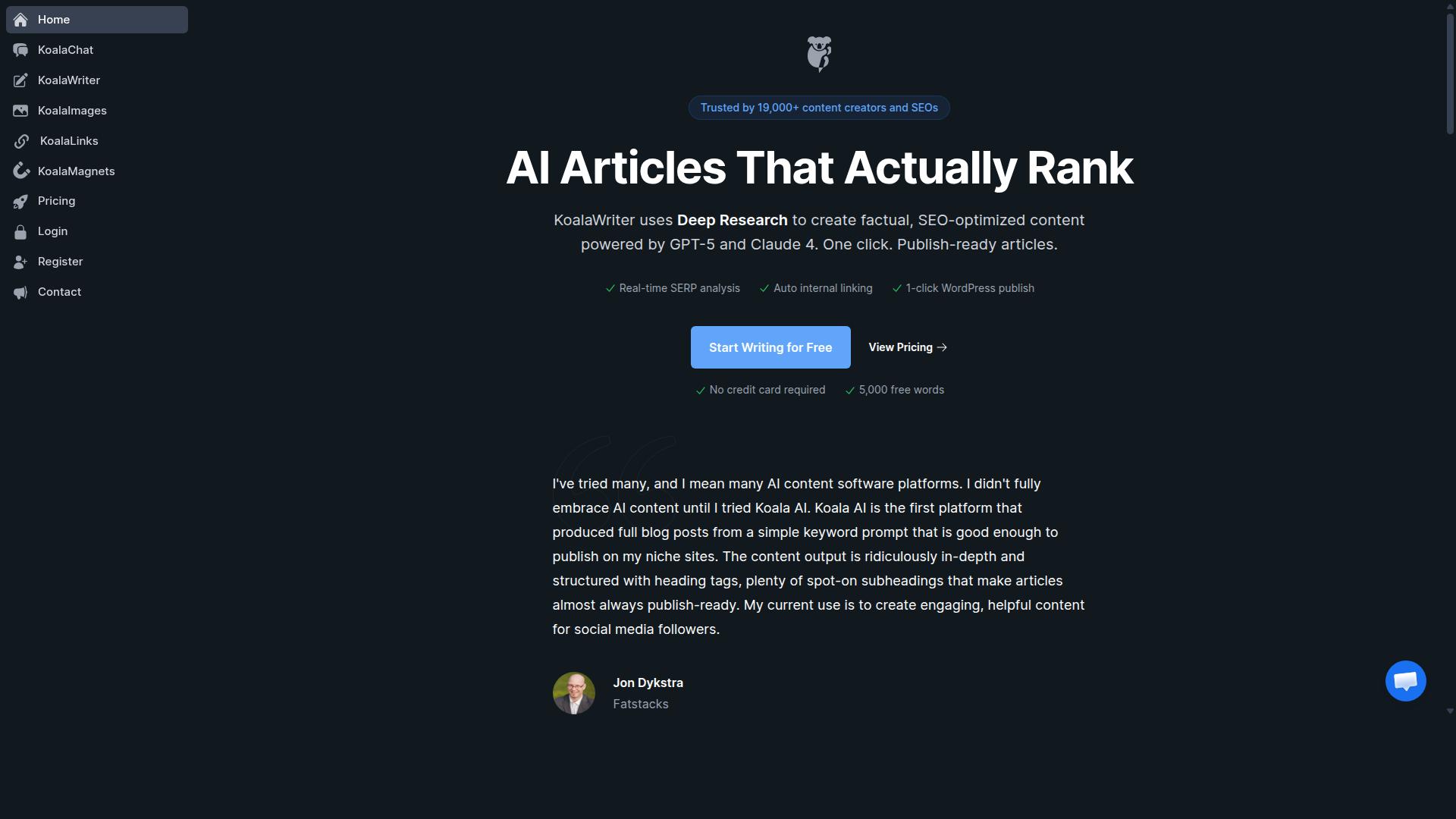
Koala Writer emphasizes SEO-focused long-form content but lacks bulk generation scale. The tool combines AI writing with search data to help create articles that rank well. Many users appreciate this SEO integration when they need optimized blog posts.
Three core strengths stand out with this option. First, it provides real-time search data during generation. Second, it includes fact-checking capabilities that improve credibility. Third, it supports WordPress publishing for faster workflow.
Three limitations exist as well. The solution struggles with large volume requests. It also skips automated keyword discovery features. Finally, backlink support remains absent from the platform.
Users who publish frequently may find these constraints challenging. Content teams requiring high volume output often seek alternatives. Those focused on single articles might find the approach sufficient.
Koala Writer pricing starts at $9 per month for basic access. The professional tier reaches $49 per month with unlimited articles. Enterprise options begin at $99 per month for larger organizations.
8. Surfer SEO

Surfer SEO centers on content optimization and SERP analysis rather than full article generation.
This platform excels when writers need data about top-ranking pages. It compares word counts, keyword placement, and overall structure across competitors.
Users receive real-time scores that guide edits within the editor. The system pulls natural language processing terms that match what search engines favor.
Many teams value the ability to export outlines directly into Google Docs or WordPress. These connections keep existing workflows intact without extra steps.
Surfer SEO delivers three core strengths. The first is its focus on measurable optimization signals that improve rankings. The second is the SERP Analyzer that breaks down successful competitors in one view. The third is the clear scoring system that shows writers exactly what needs adjustment.
Three limitations exist as well. The platform does not generate complete articles from scratch. Users must still create original drafts before applying optimization layers. Some writers find the interface crowded when managing multiple projects at once.
How to Choose the Right Option
Choosing the right AI article generator depends on your monthly volume, SEO needs, and budget constraints.
Bloggers need consistent output and simple workflows. They benefit from tools that handle research, drafting, and SEO optimization without complex setup requirements.
Agencies require scalability across multiple client projects. Features like team collaboration, bulk generation, and client reporting become essential when managing several accounts simultaneously.
Affiliate marketers prioritize conversion-focused content and keyword targeting. They need platforms that support long-form articles with proper affiliate link placement and performance tracking capabilities.
| Audience Type | Primary Feature Priority | Credit Requirements |
|---|---|---|
| Bloggers | Research and SEO tools | Moderate monthly credits for regular posting |
| Agencies | Team access and bulk operations | Higher credit allowances across multiple users |
| Affiliate Marketers | Keyword optimization and length controls | Flexible credits for longer, targeted articles |
Autoblogging.ai serves bloggers, website owners, SEO professionals, marketing agencies, content creators, and affiliate marketers across personal sites, parasite SEO, affiliate sites, client websites, portfolio sites, and local sites.
Evaluate your specific content goals before committing to any platform. The right solution matches your volume needs with available features and credit structures.
Final Verdict
Autoblogging.ai stands out for its combination of bulk capacity, SERP analysis, and affordable entry pricing. 40,000+ content creators trust the platform to handle demanding workflows. The service has generated over 1M articles while maintaining a 4.9 average rating from users.
Users gain access to 10+ AI modes and 35+ languages for diverse content needs. 35+ integrations allow connection with existing tools without extra setup friction. Credits rollover across billing cycles, which helps teams manage variable output demands.
The platform includes a human proofreader in all plans. 21-point SEO audit and featured snippet optimization tools help improve search visibility. SERP competitor analysis supports strategic content planning decisions.
One-click WordPress publish streamlines the final step of content distribution. 24/7 support ensures assistance remains available regardless of time zone or schedule. New features ship weekly, which means the platform continues to evolve based on user needs.
Arvow works for some teams, yet many creators discover they need more capacity, deeper SEO capabilities, and broader language support. Autoblogging.ai addresses those gaps directly through its verified feature set. Readers who want to compare plans can visit the Autoblogging.ai pricing page.
Frequently Asked Questions
What makes Autoblogging.ai stand out compared to other AI writing tools?
Autoblogging.ai provides 10+ AI modes such as Godlike Mode for SERP competitor analysis and Bulk Generation for up to 500 articles via CSV, along with 35+ integrations and a human proofreader included in plans. Trusted by 40,000+ content creators with a 4.9 average rating and over 1M articles generated, it focuses on saving time for bloggers and agencies worldwide.
Who is Autoblogging.ai best suited for?
Autoblogging.ai targets bloggers, website owners, SEO professionals, marketing agencies, content creators, and affiliate marketers working on personal sites, affiliate sites, client websites, or local SEO projects. Its mission centers on using cutting-edge AI to improve online presence without manual effort.
Can Autoblogging.ai handle bulk or large-volume content needs?
Yes, the Bulk Generation mode supports creating up to 500 articles at once through CSV uploads, with credit-based plans scaling from 40 credits on the Starter plan to 5,000 on Enterprise. Credits rollover across plans, making it practical for ongoing high-volume requirements.
Does Autoblogging.ai support multiple languages and SEO features?
Autoblogging.ai supports 35+ languages and includes specialized modes like News Mode and Godlike Mode that incorporate LSI keywords and knowledge graph extraction. This combination helps users produce SEO-friendly content efficiently across global markets.
What kind of support and updates does Autoblogging.ai offer?
Autoblogging.ai provides 24/7 support, ships new features weekly, and includes a human proofreader with all plans. Users benefit from a global service available online with responsive assistance from the team based in India and the United Kingdom.
Are Autoblogging.ai plans flexible for different budgets?
Monthly plans start at $19 for 40 credits and go up to $999 for 5,000 credits, with annual billing options that include discounts. This structure allows individuals and agencies to select plans matching their content volume without overcommitting.